ROLE
ABOUT
X
IDENTITY
Polietico is a communication campaign developed in December 2021 and promoted by the Comitato Unico di Garanzia of Politecnico di Milano.
The project translates the University’s Code of Ethics into a participatory communication system aimed at fostering active engagement within the academic community.
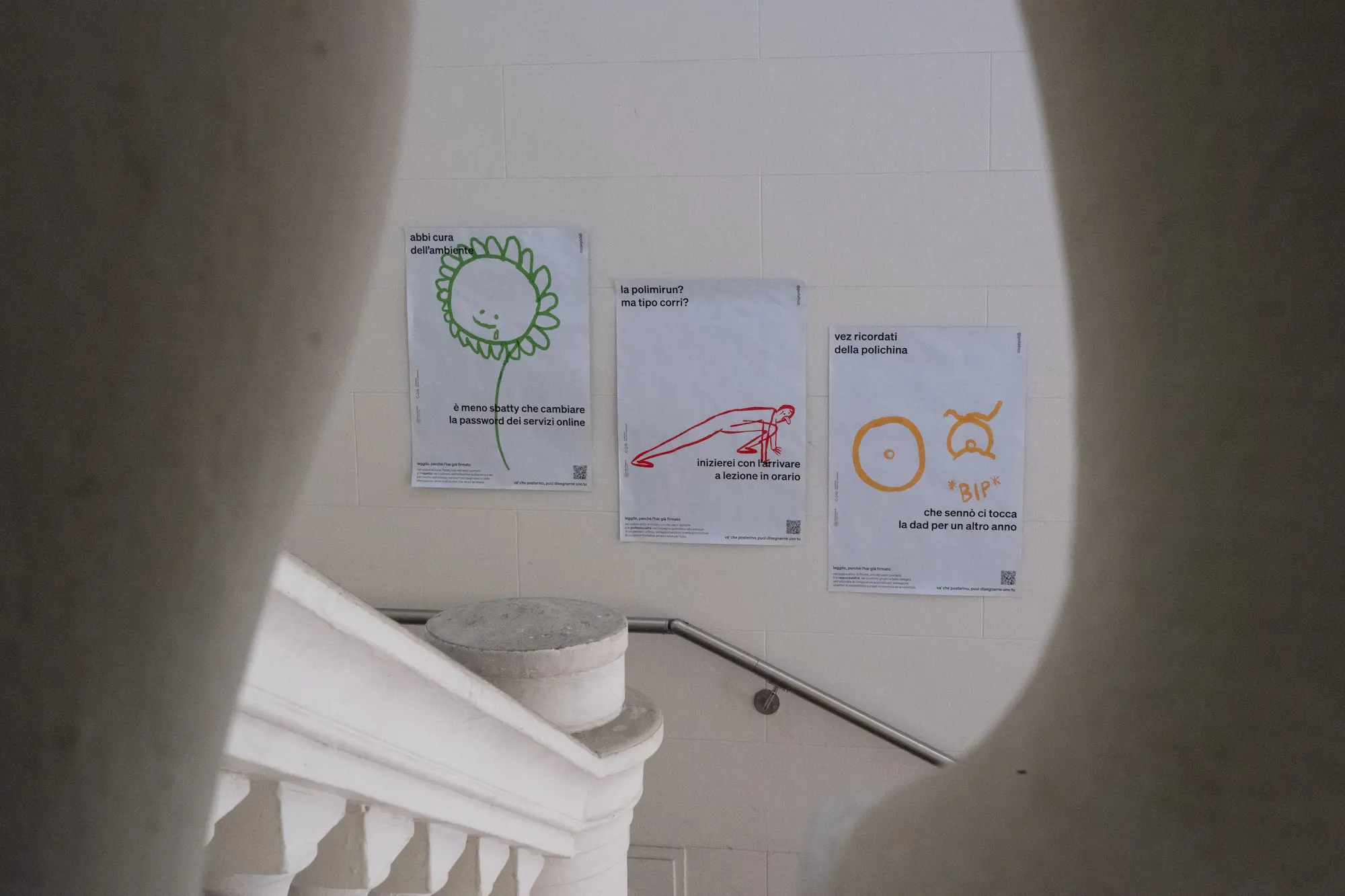
Each institutional value was interpreted through a dedicated poster series. The campaign extended beyond visual outputs through a digital platform that enabled students to create and share their own interpretations.
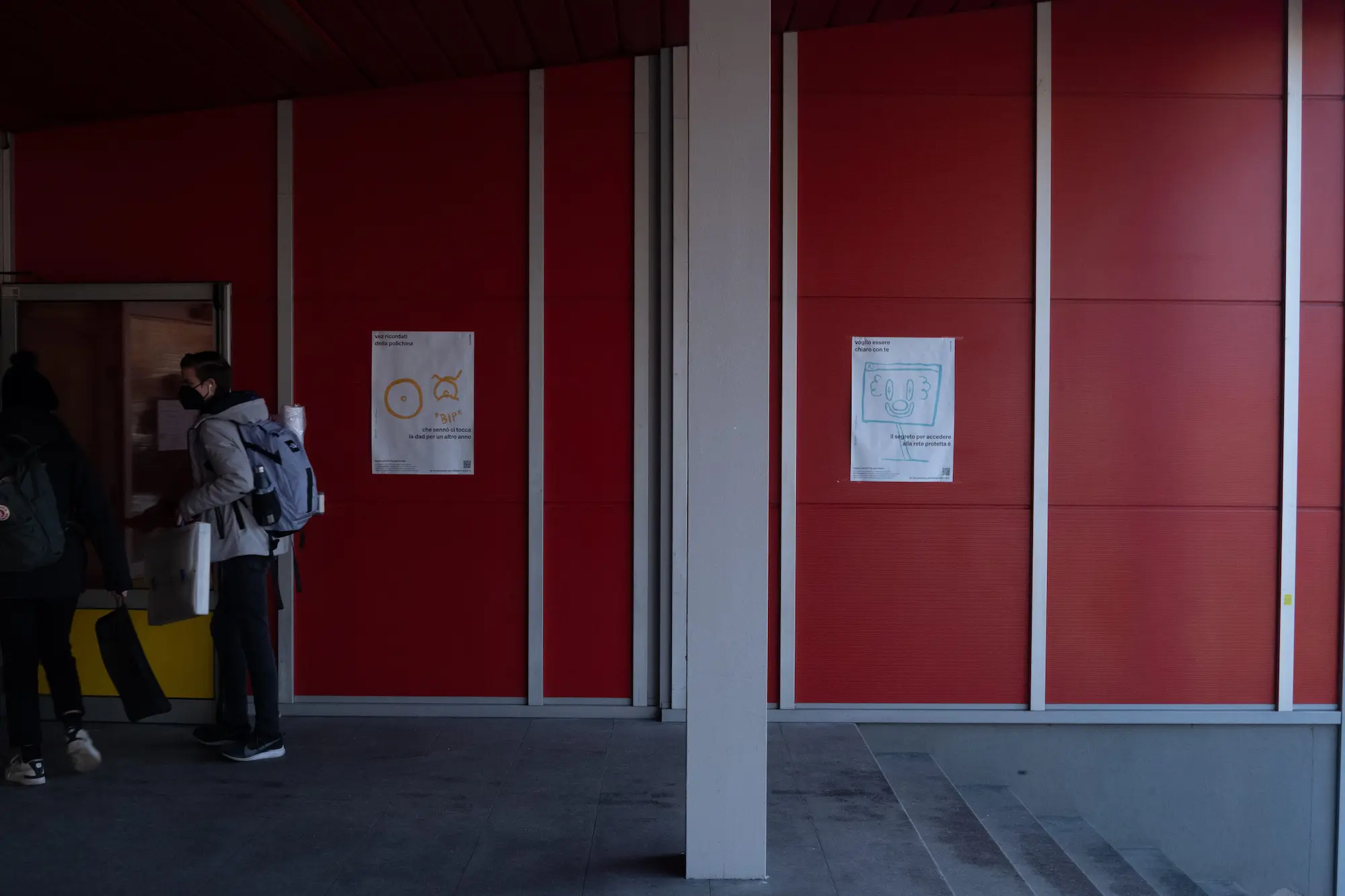
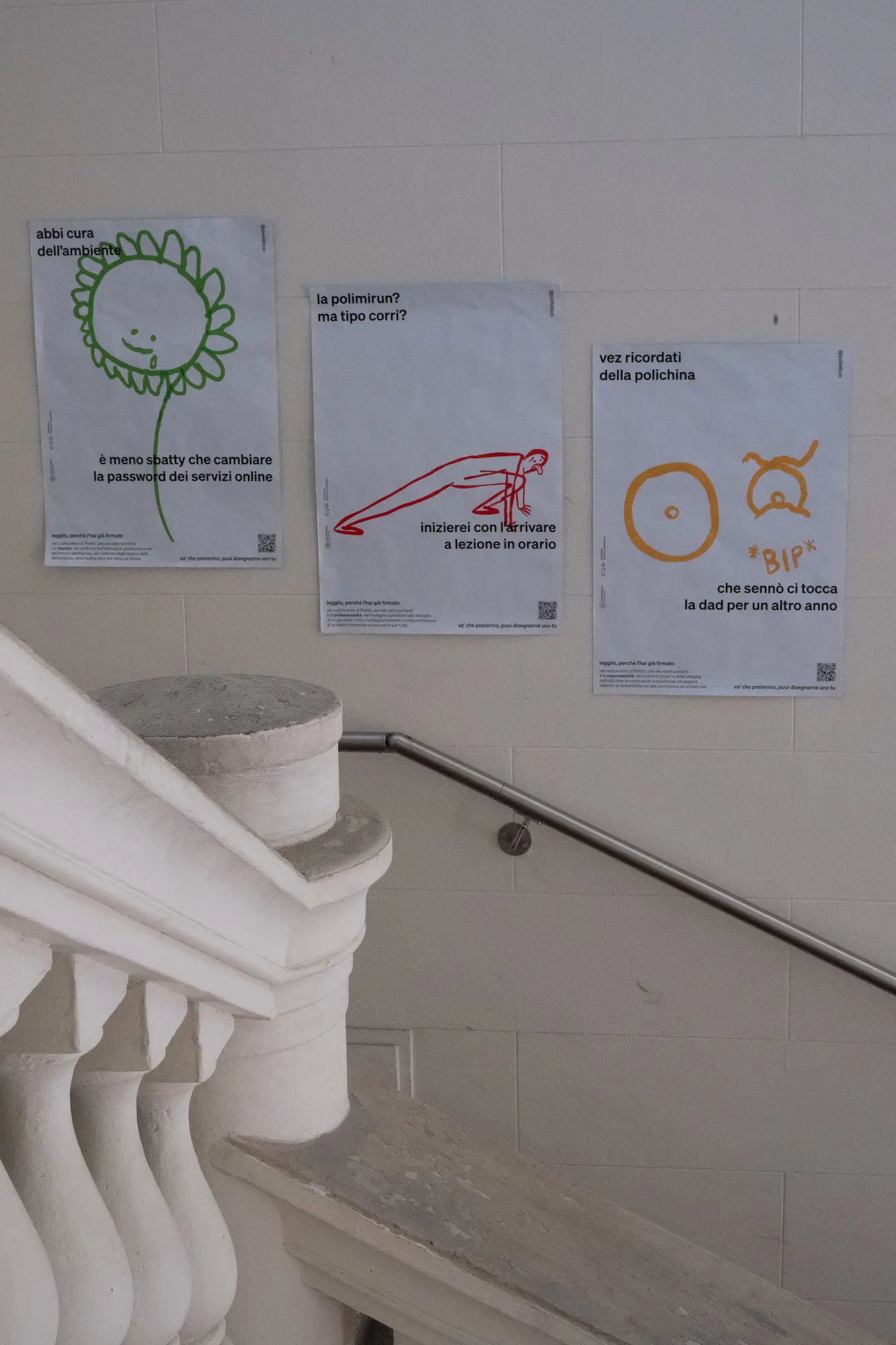
The initiative combined physical distribution, social media activation and live events to sustain long-term participation.
GRAMMAR
The campaign adopts a memetic and colloquial tone applied within an institutional framework.
The deliberate contrast between official content and informal language operates as a communicative equalizer.
This dissonance reduces hierarchical distance and reframes institutional values as shared cultural material rather than imposed doctrine. Irony becomes a strategic device: it attracts attention while softening the rigidity typically associated with ethical codes.
The institution does not abandon authority; it repositions it through linguistic proximity.
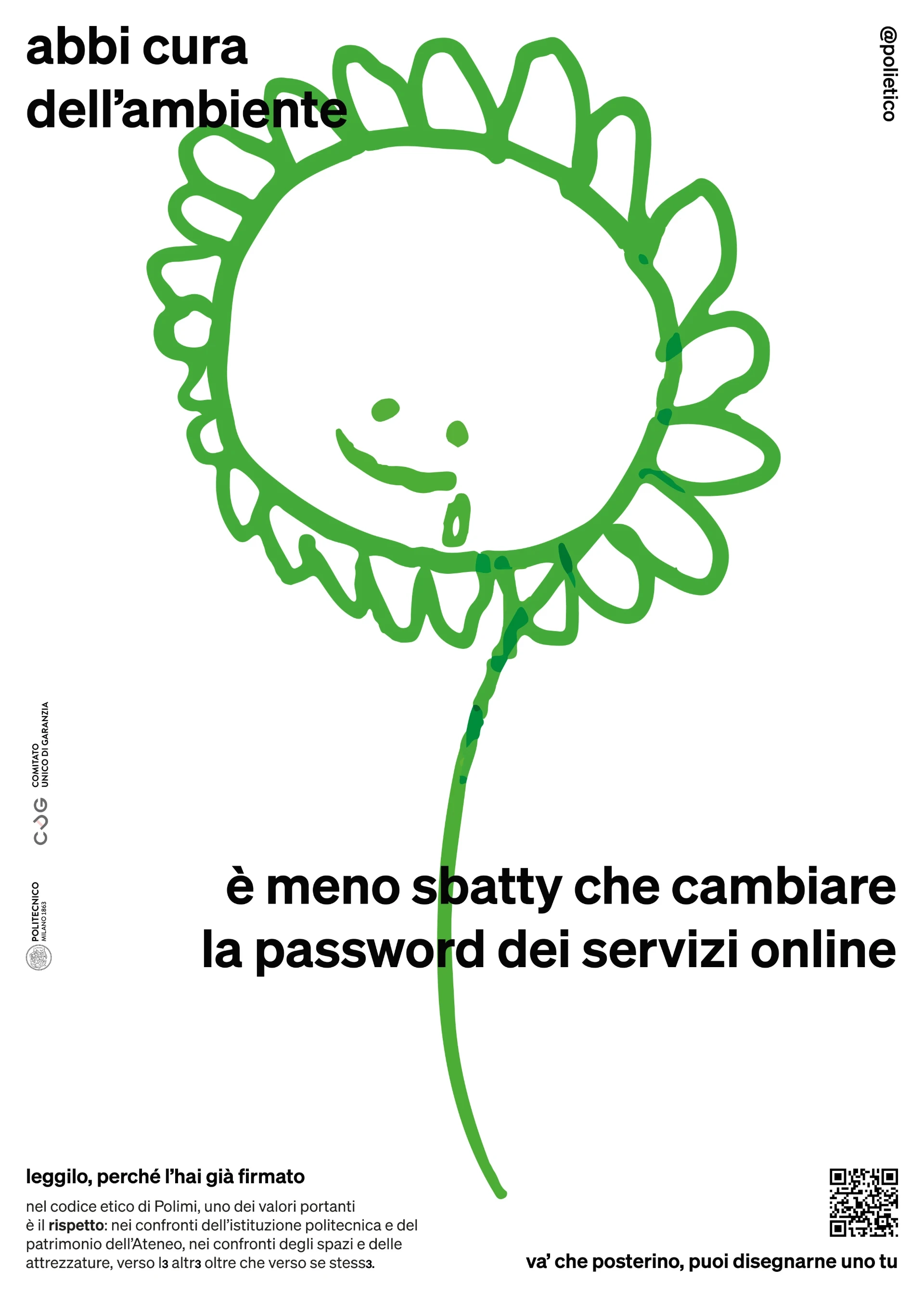
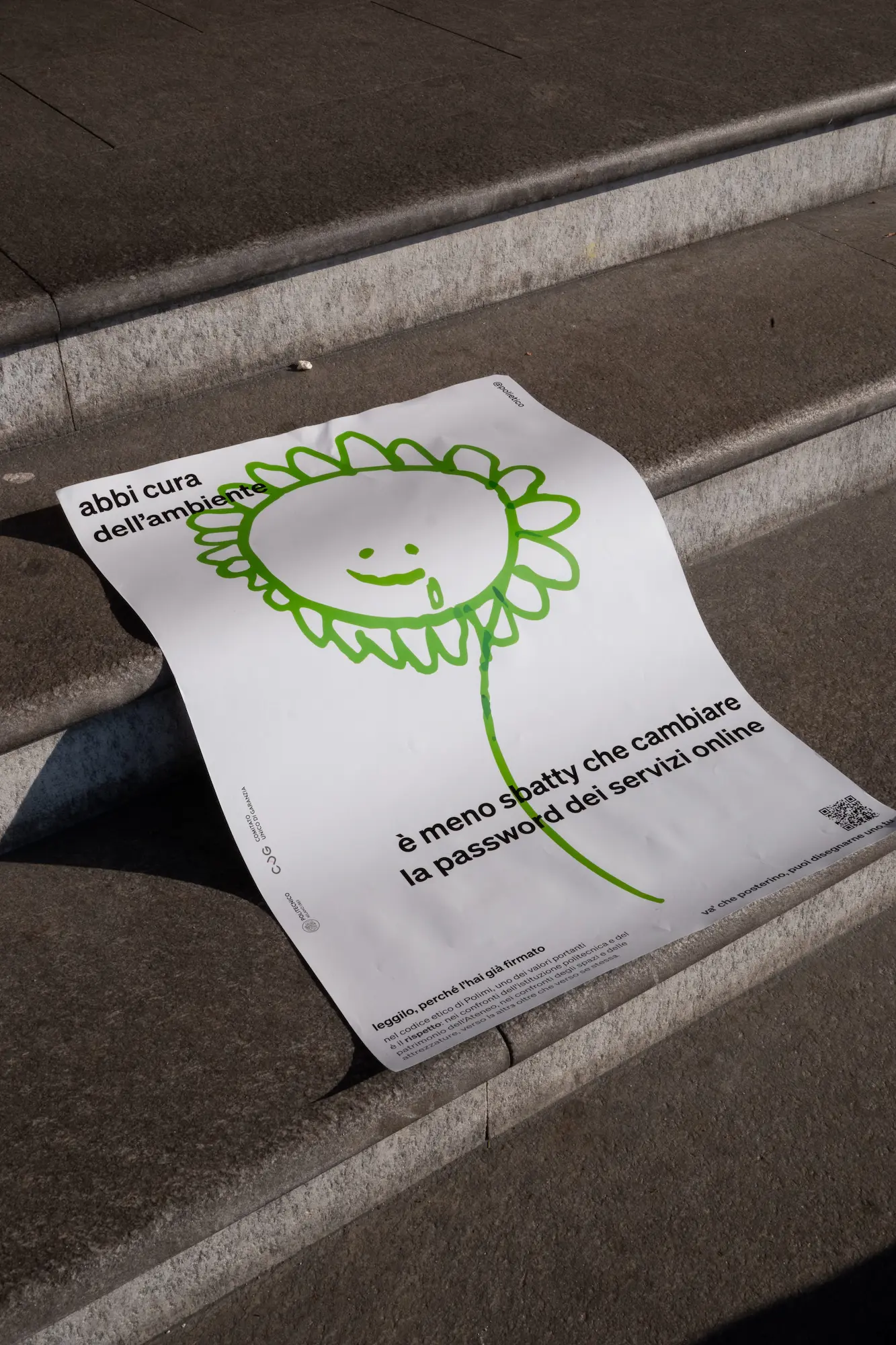
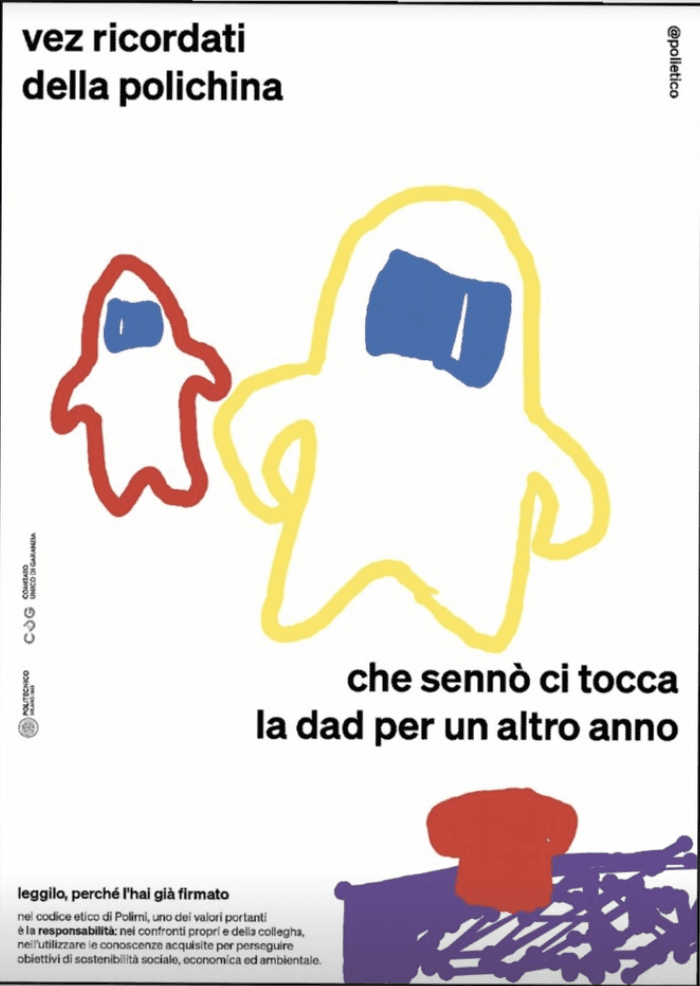
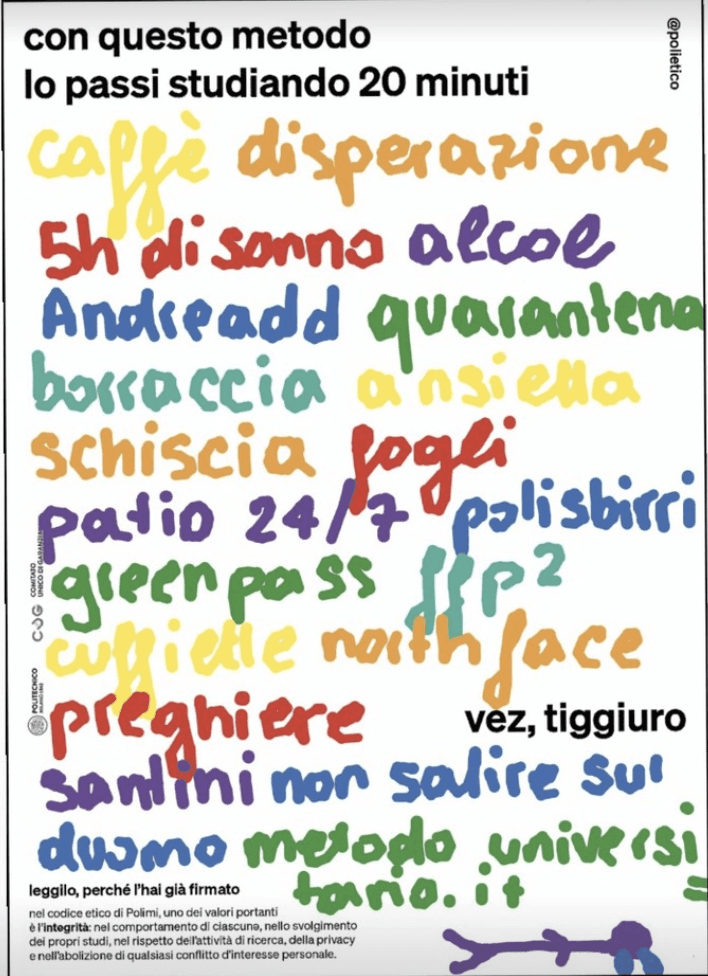
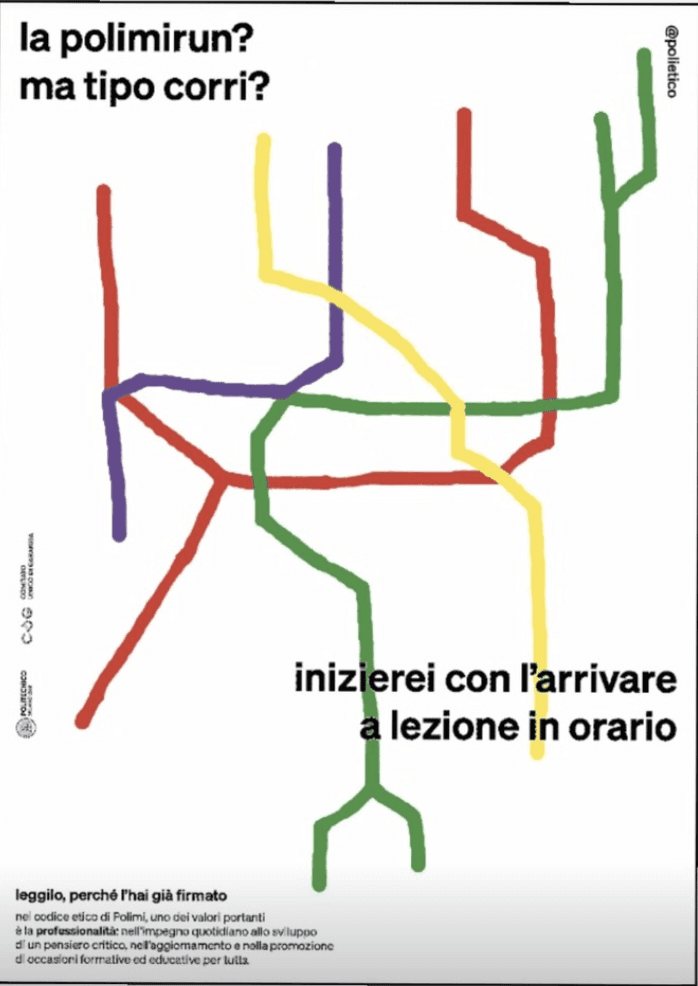
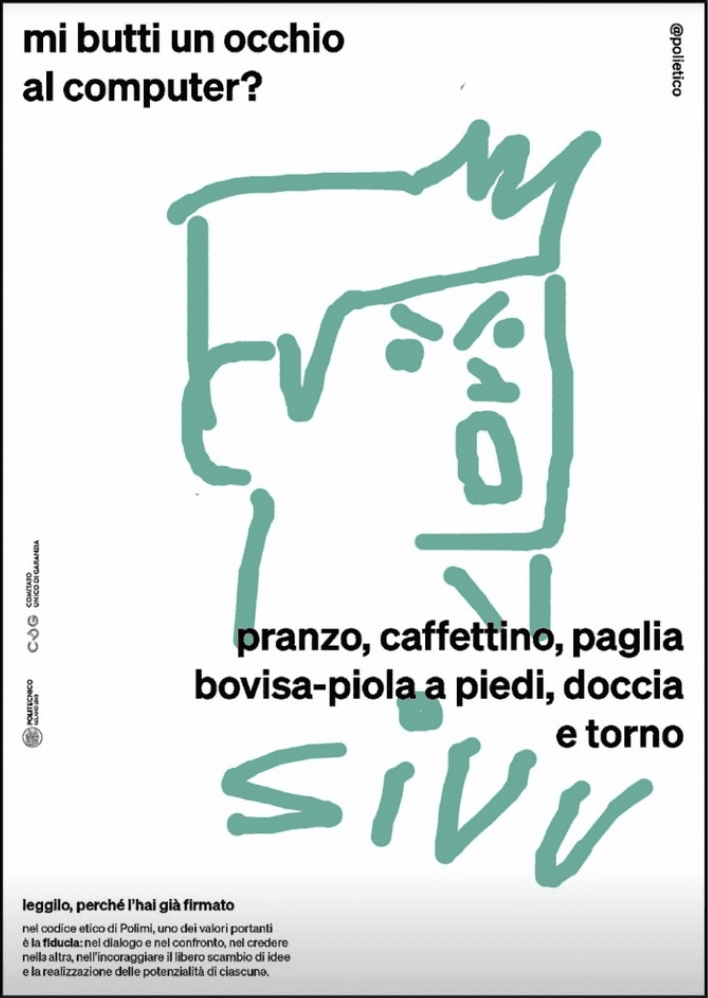
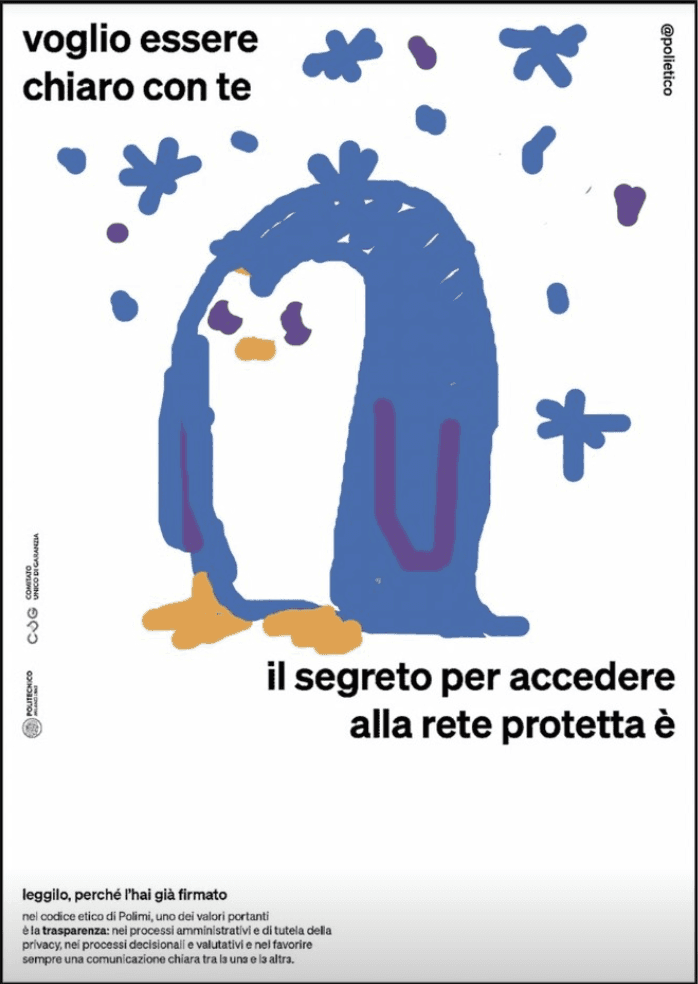
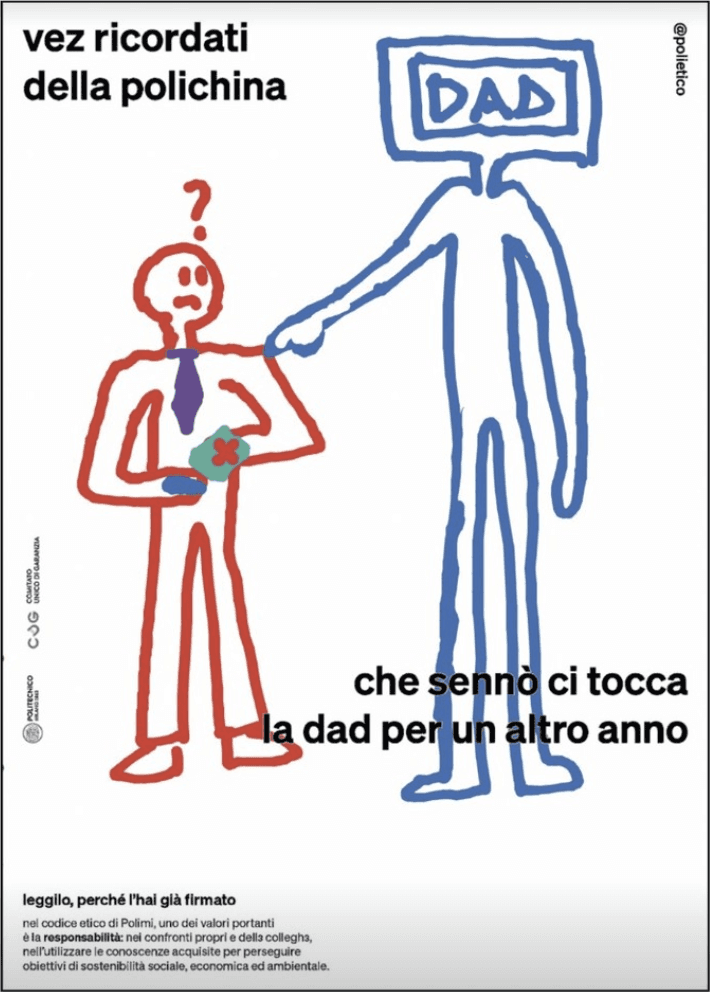
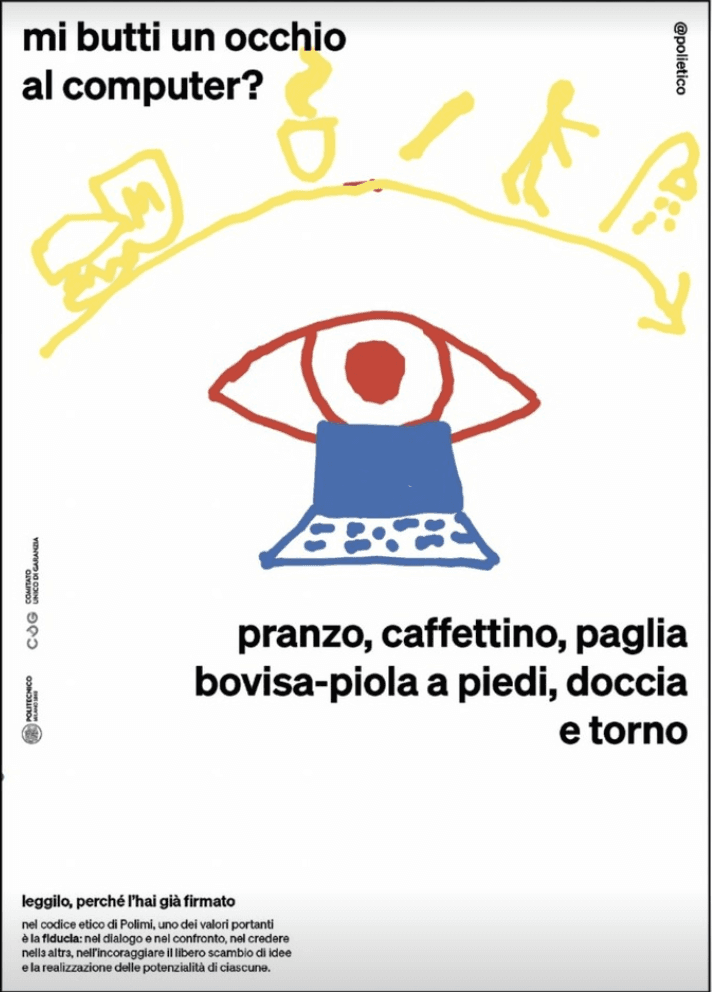
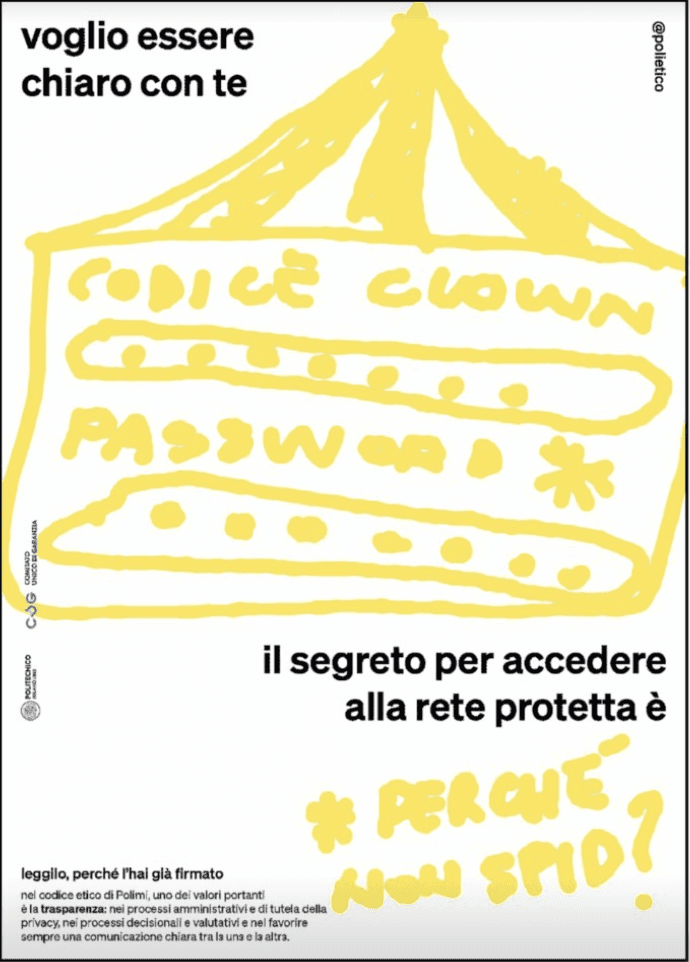
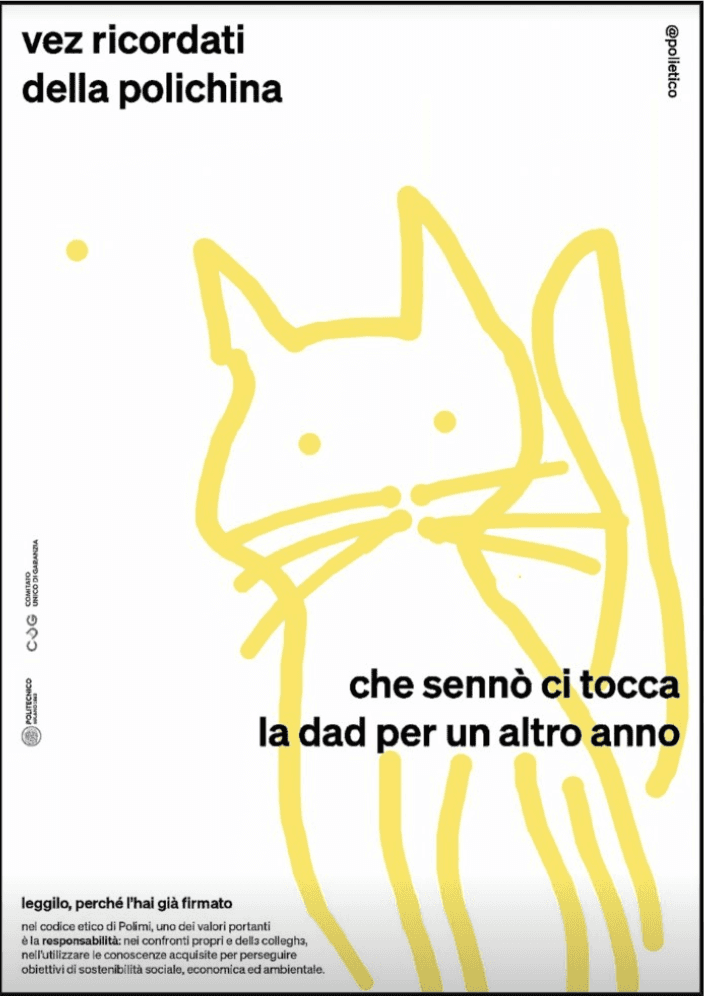
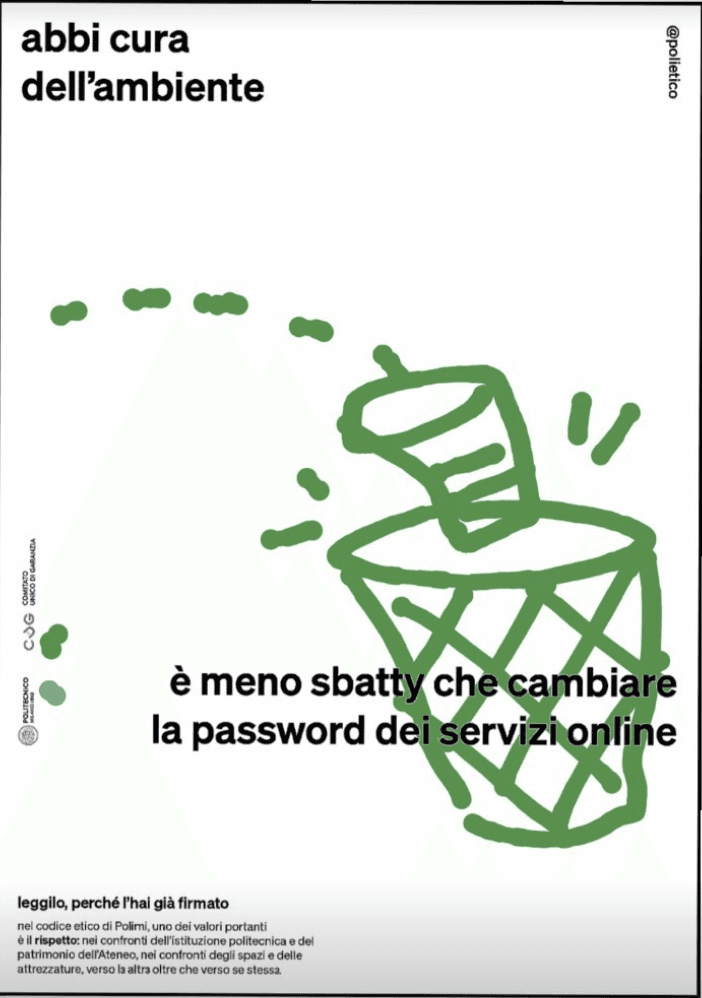
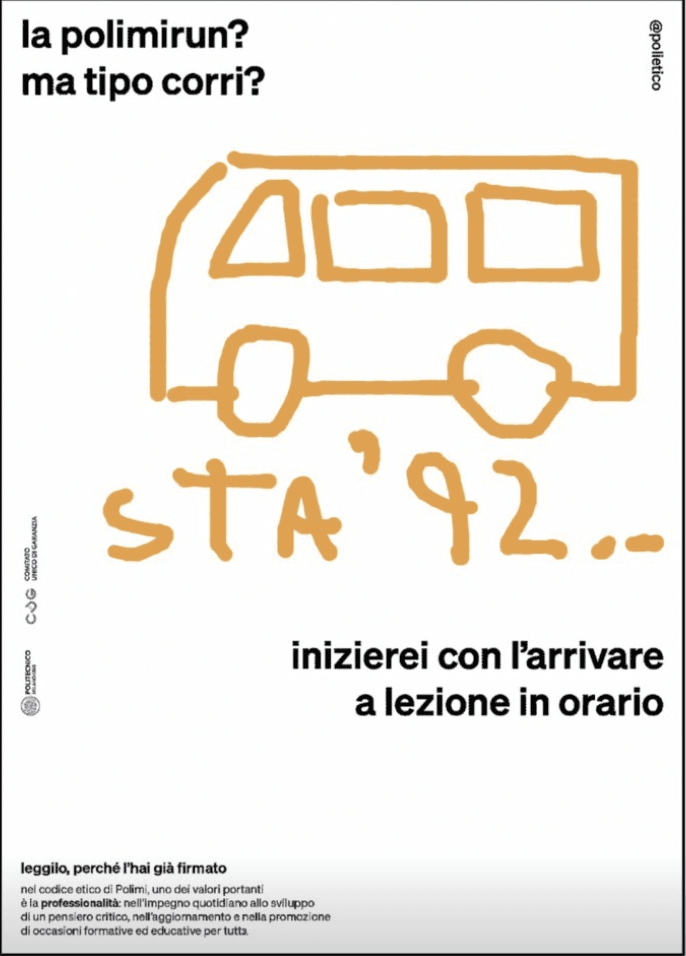
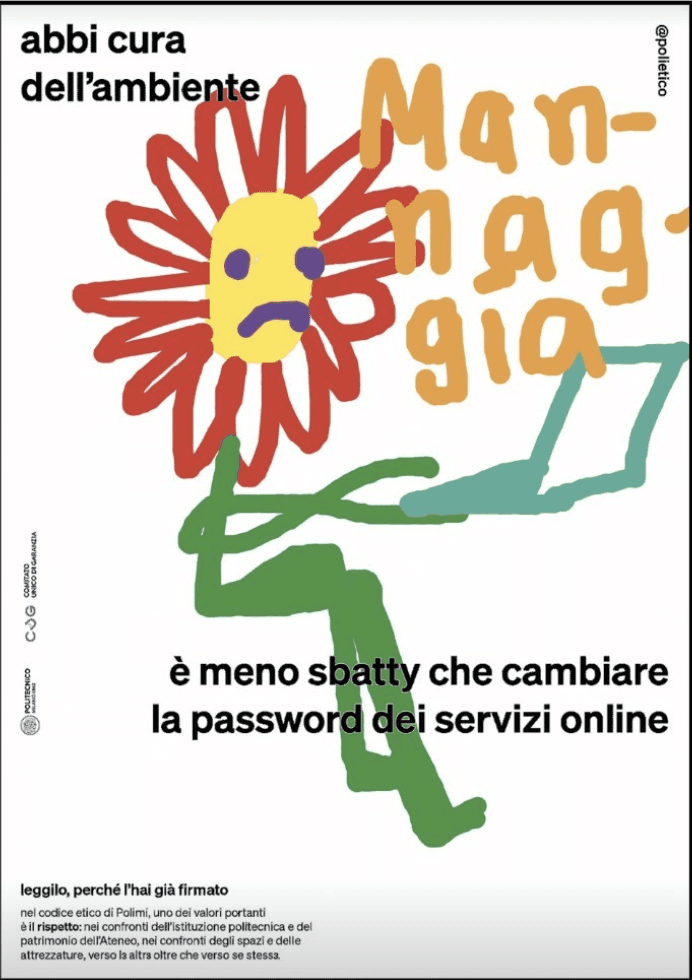
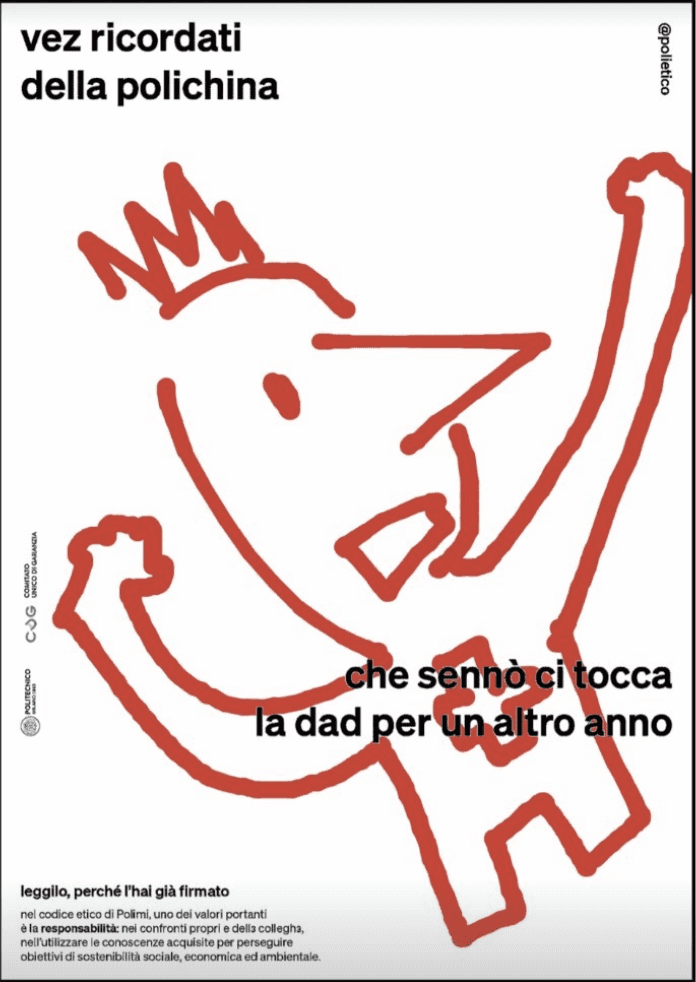
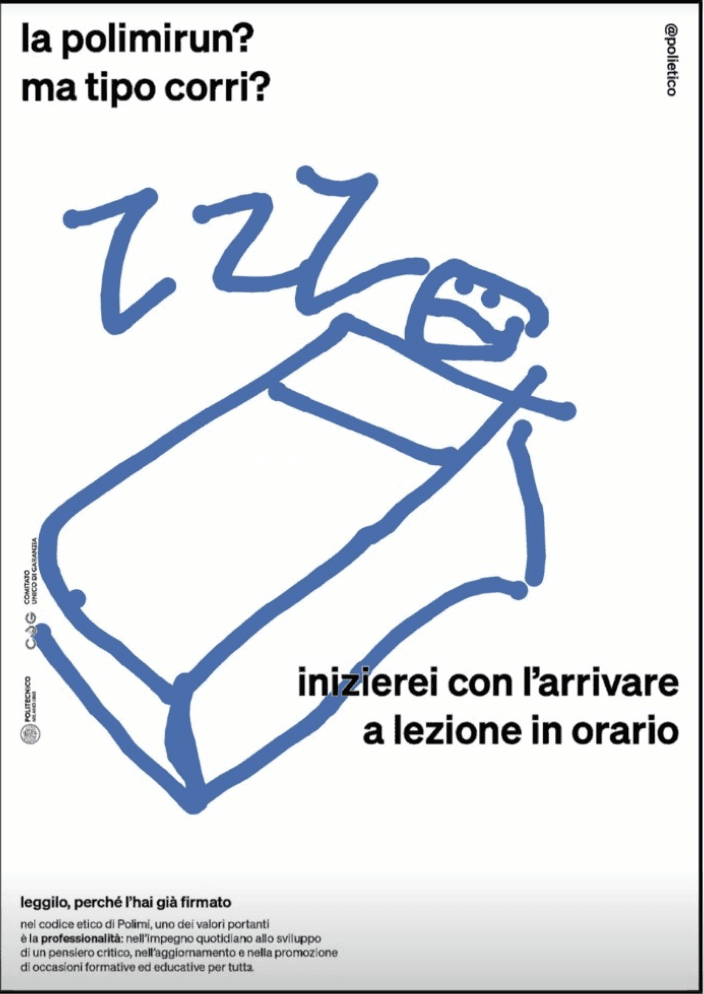
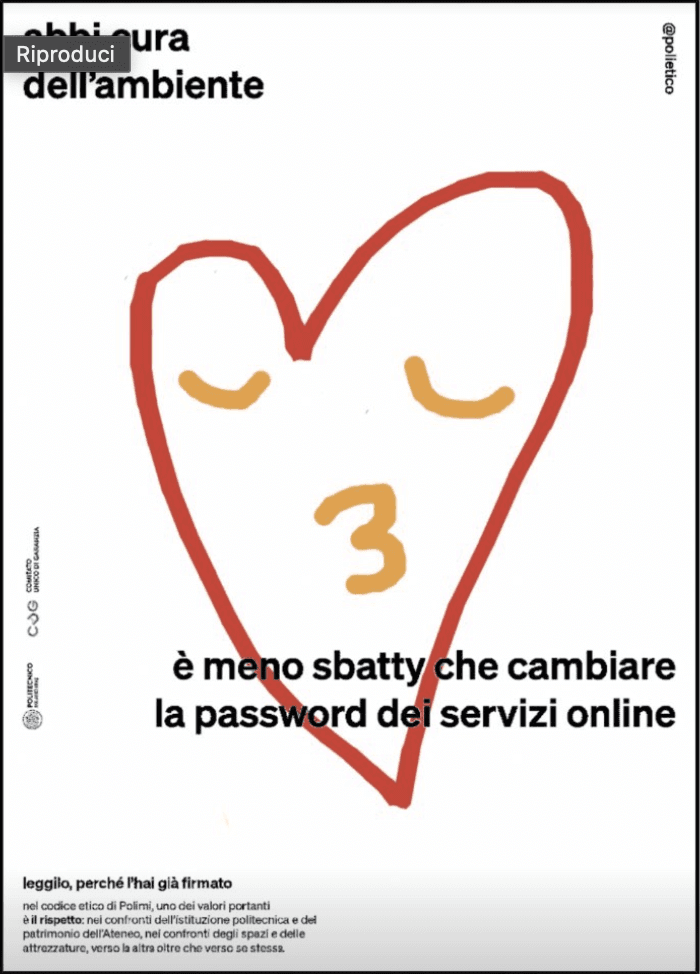
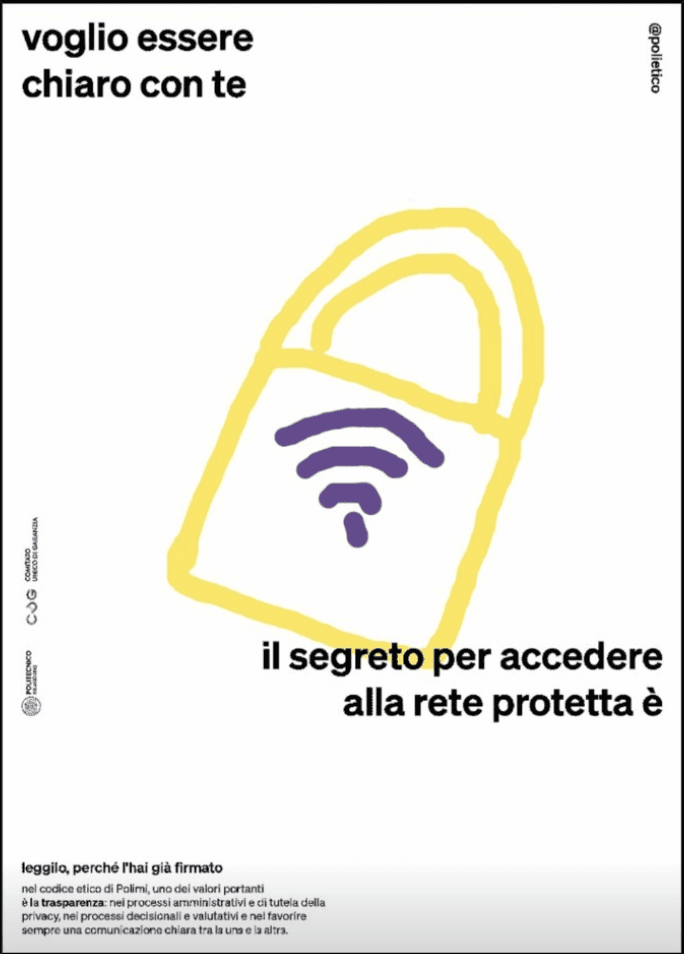
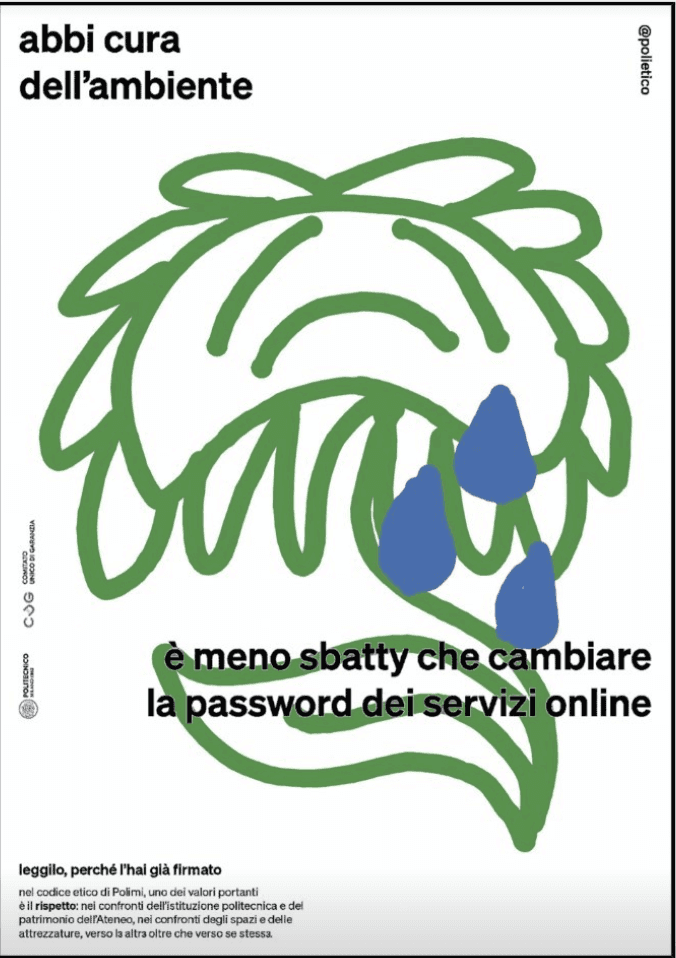
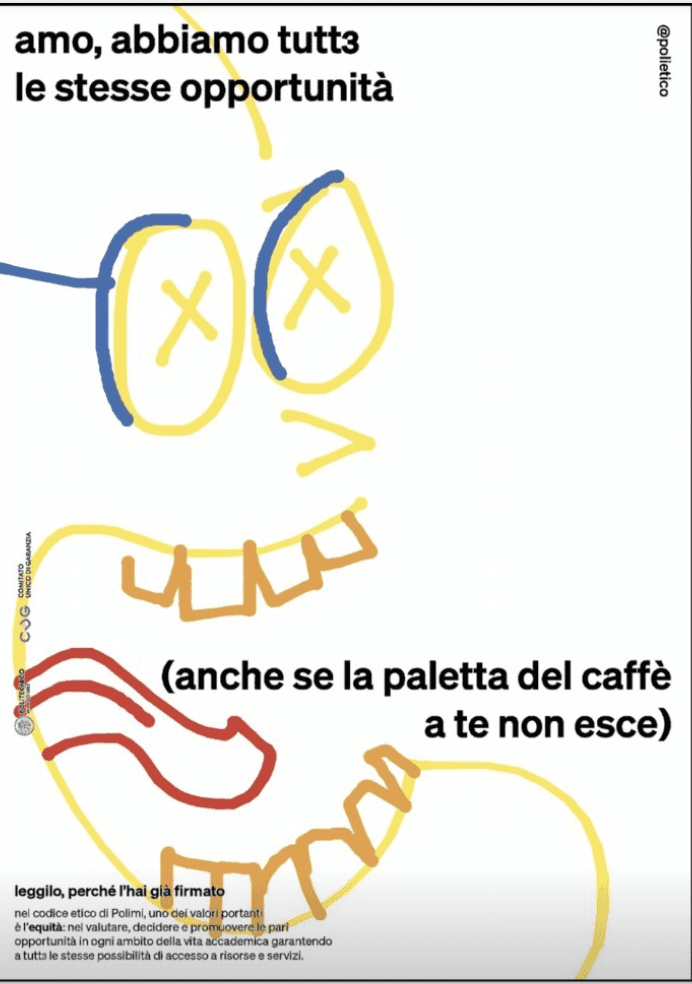
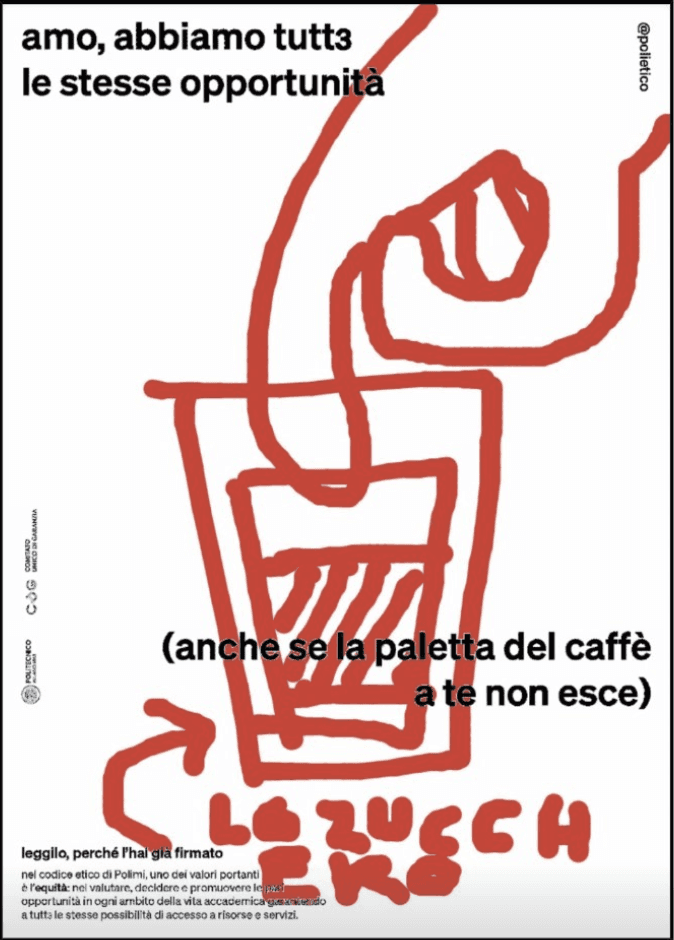
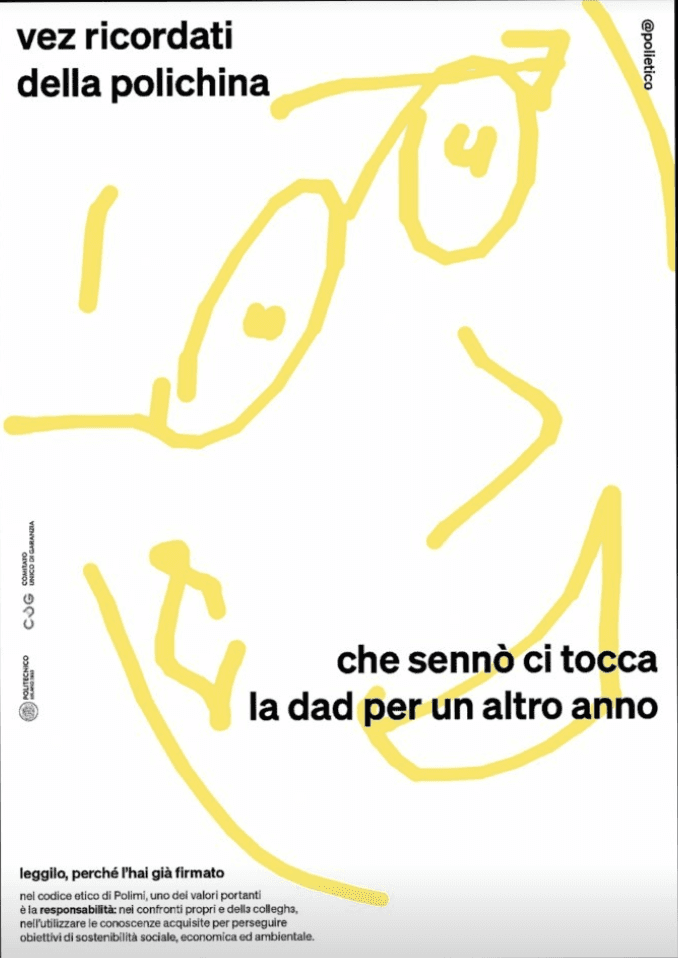
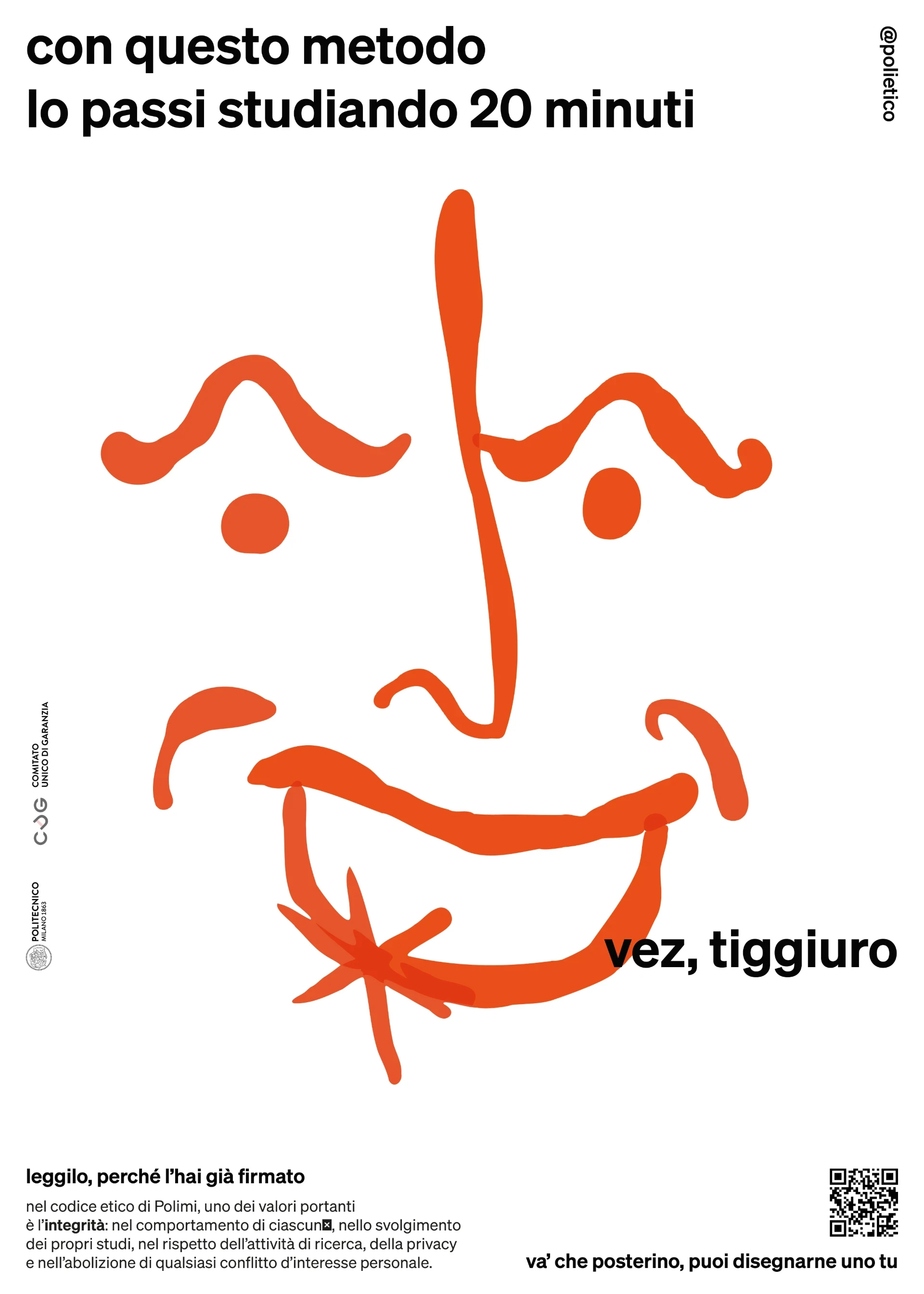
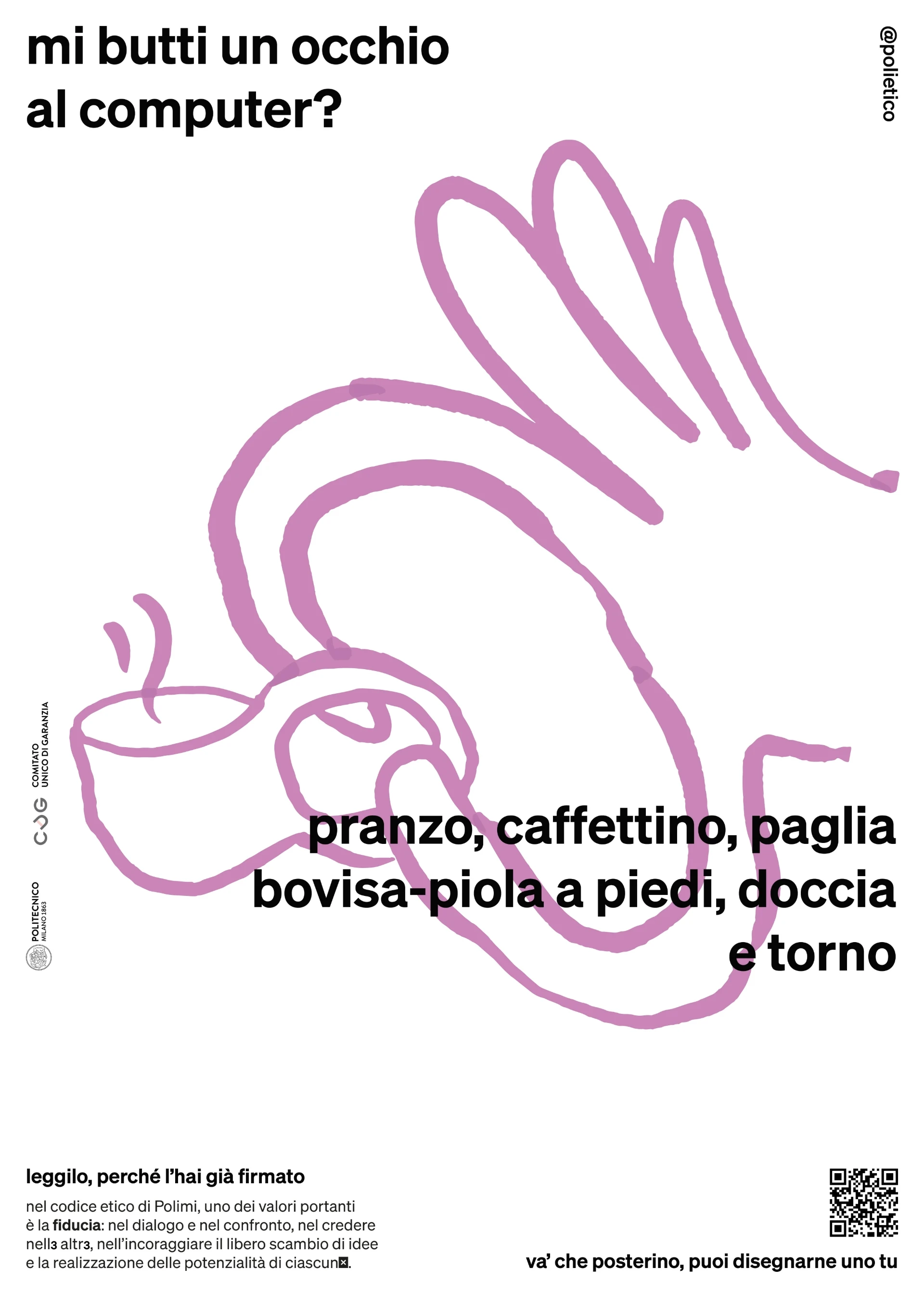
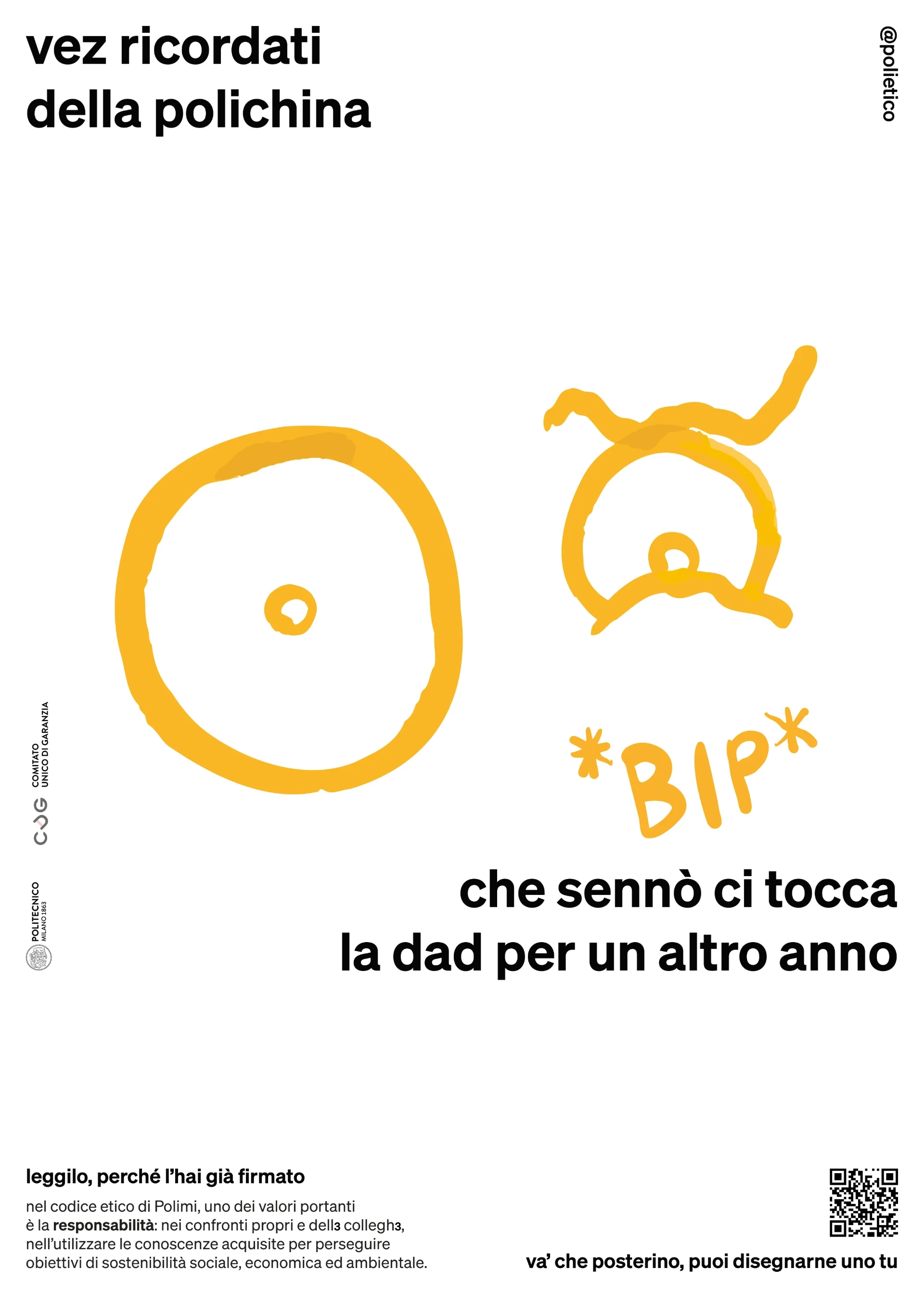
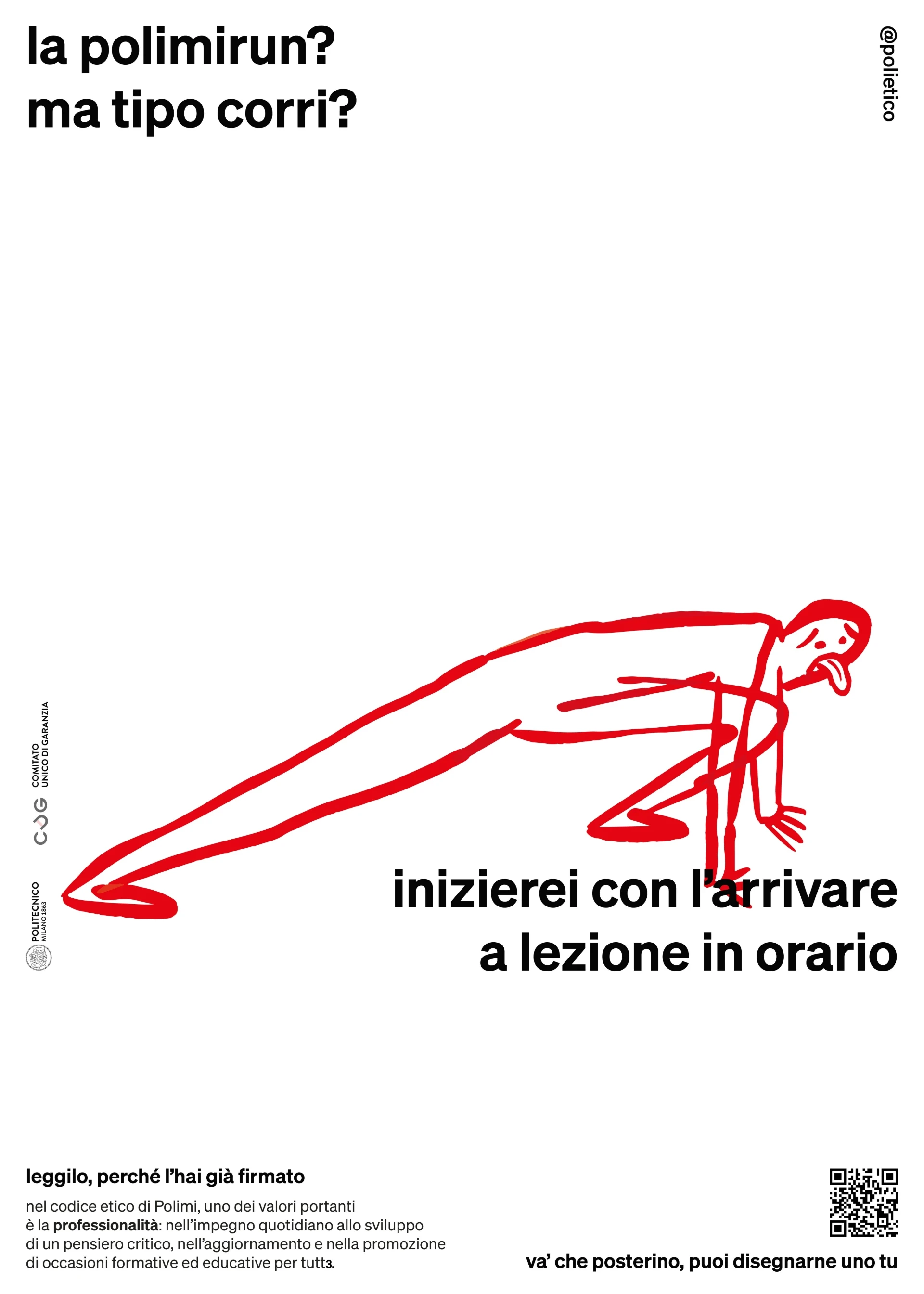
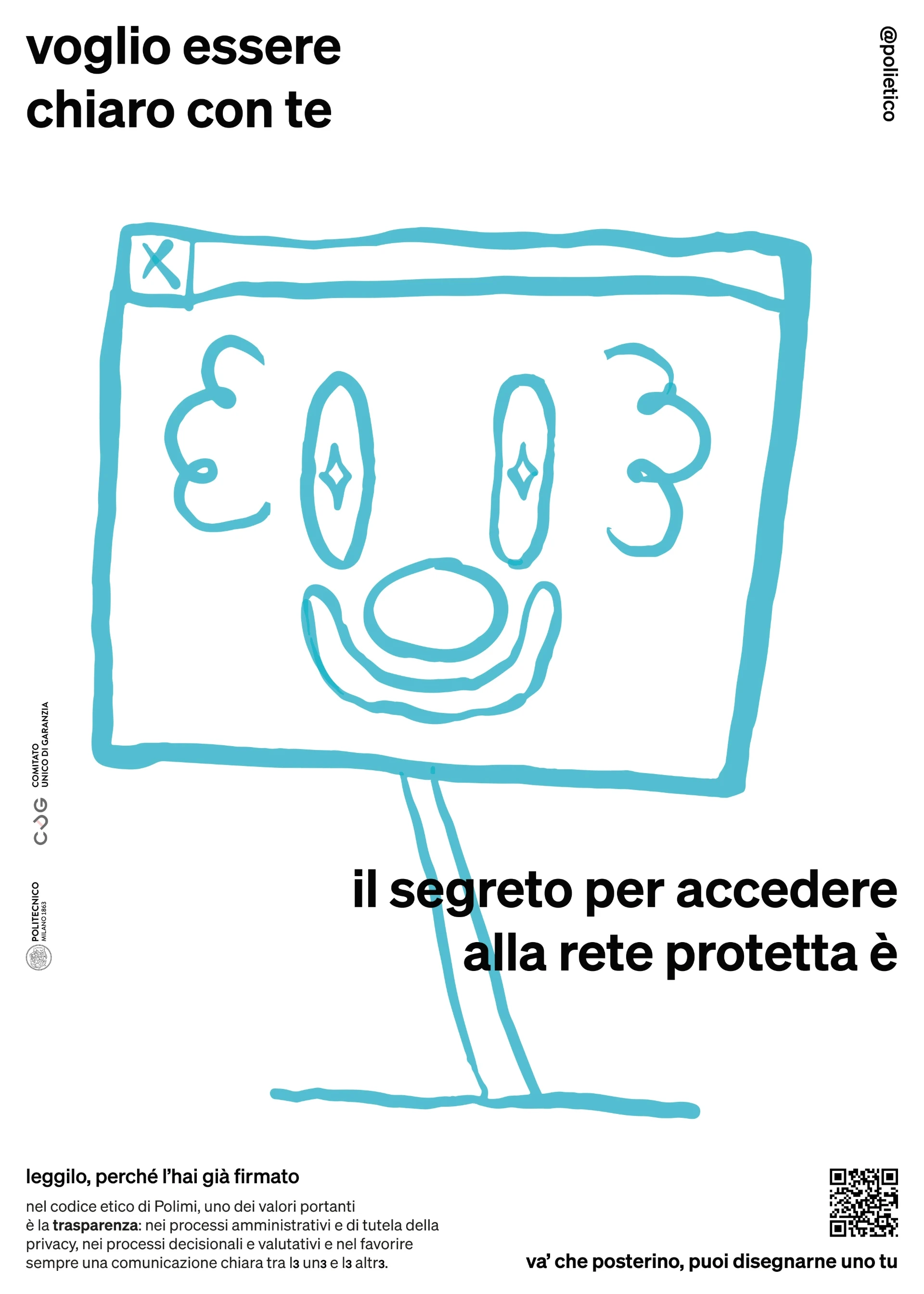
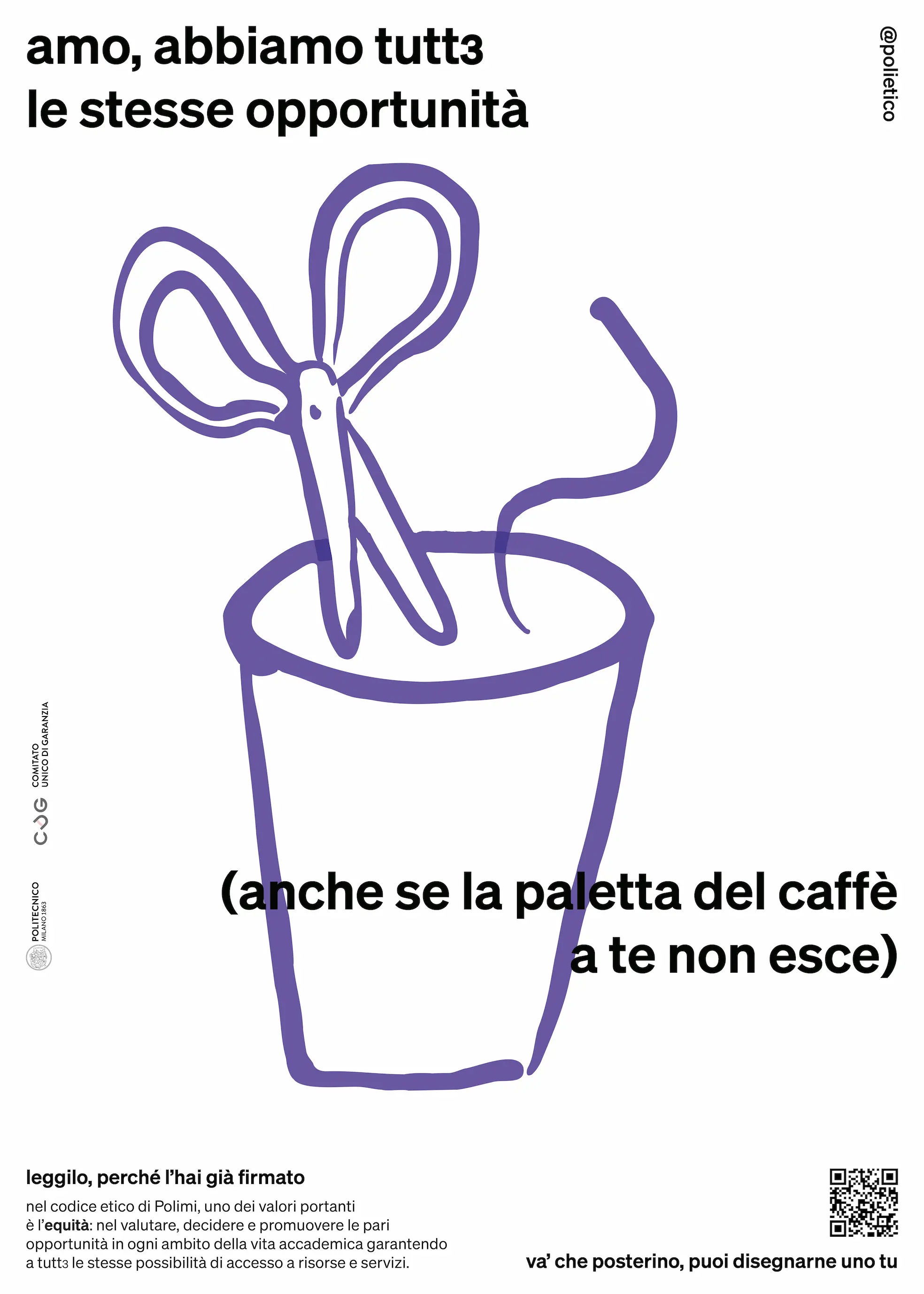
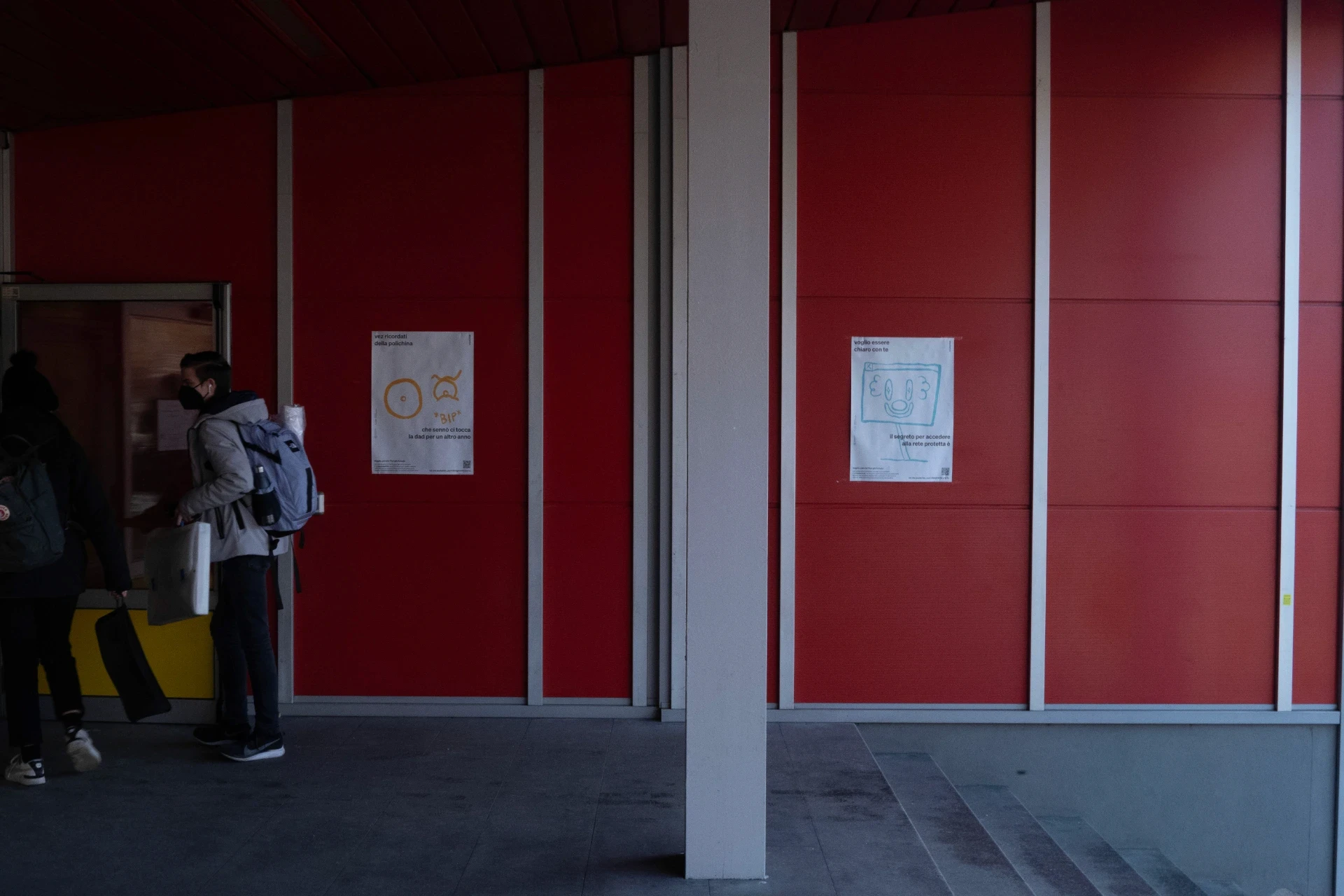
The visual system is based on intentionally imperfect, hand-drawn forms resembling quick digital doodles; this aesthetic lowers the threshold of participation. The simplicity and reproducibility of the marks allow them to be replicated across screens and by individuals without specialized tools.
Visual roughness functions as an open interface; by avoiding polished institutional graphics, the campaign invites appropriation and response, transforming the poster from statement into prompt.
The design language operates less as a finished product and more as a framework for collective reinterpretation.

The simplicity and reproducibility of the marks allow them to be replicated across screens and by individuals without specialized tools.
Visual roughness functions as an open interface; by avoiding polished institutional graphics, the campaign invites appropriation and response, transforming the poster from statement into prompt.
The design language operates less as a finished product and more as a framework for collective reinterpretation.
(1/7)
Posters
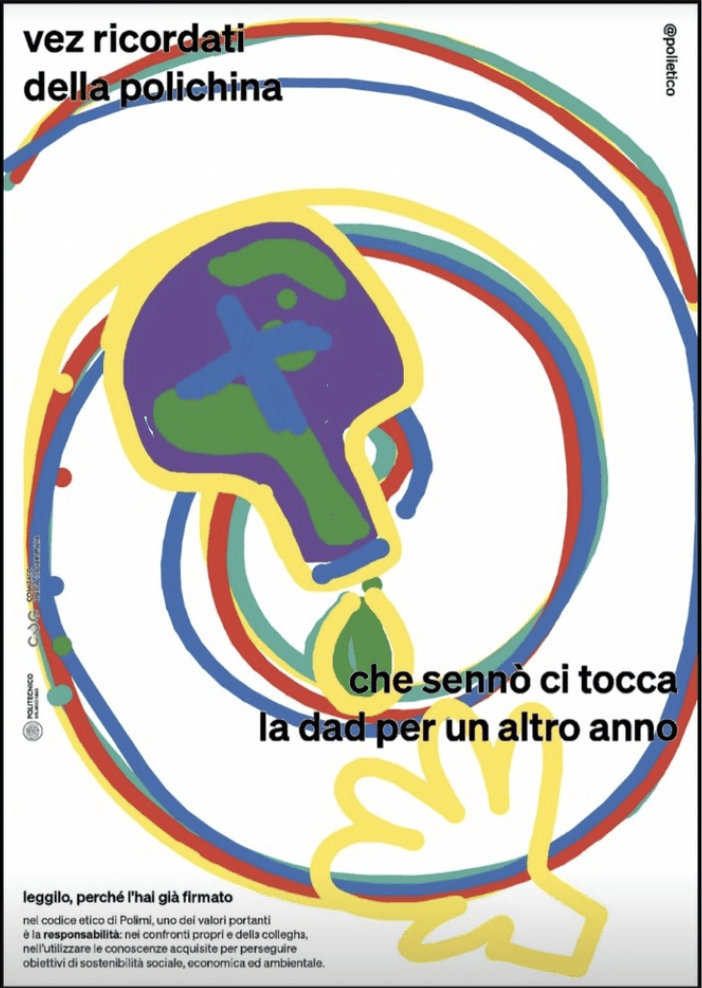
made by students with the website tool
PARTICIPATORY DESIGN
COMMUNICATION STRATEGY
ART DIRECTION
SYSTEM DESIGN
UX
2021
POLIETICO
POLITECNICO DI MILANO
IDENTITY
Polietico is a communication campaign developed in December 2021 and promoted by the Comitato Unico di Garanzia of Politecnico di Milano.
The project translates the University’s Code of Ethics into a participatory communication system aimed at fostering active engagement within the academic community.
Each institutional value was interpreted through a dedicated poster series. The campaign extended beyond visual outputs through a digital platform that enabled students to create and share their own interpretations.
The initiative combined physical distribution, social media activation and live events to sustain long-term participation.
GRAMMAR
The campaign adopts a memetic and colloquial tone applied within an institutional framework.
The deliberate contrast between official content and informal language operates as a communicative equalizer.
This dissonance reduces hierarchical distance and reframes institutional values as shared cultural material rather than imposed doctrine. Irony becomes a strategic device: it attracts attention while softening the rigidity typically associated with ethical codes.
The institution does not abandon authority; it repositions it through linguistic proximity.
The visual system is based on intentionally imperfect, hand-drawn forms resembling quick digital doodles; this aesthetic lowers the threshold of participation. The simplicity and reproducibility of the marks allow them to be replicated across screens and by individuals without specialized tools.
Visual roughness functions as an open interface; by avoiding polished institutional graphics, the campaign invites appropriation and response, transforming the poster from statement into prompt.
The design language operates less as a finished product and more as a framework for collective reinterpretation.
The simplicity and reproducibility of the marks allow them to be replicated across screens and by individuals without specialized tools.
Visual roughness functions as an open interface; by avoiding polished institutional graphics, the campaign invites appropriation and response, transforming the poster from statement into prompt.
The design language operates less as a finished product and more as a framework for collective reinterpretation.
Posters
made by students with the website tool
Posters
made by students with the website tool